Cracking Open: Why Letting People See You Struggle Is the Bravest Thing You'll Ever Do

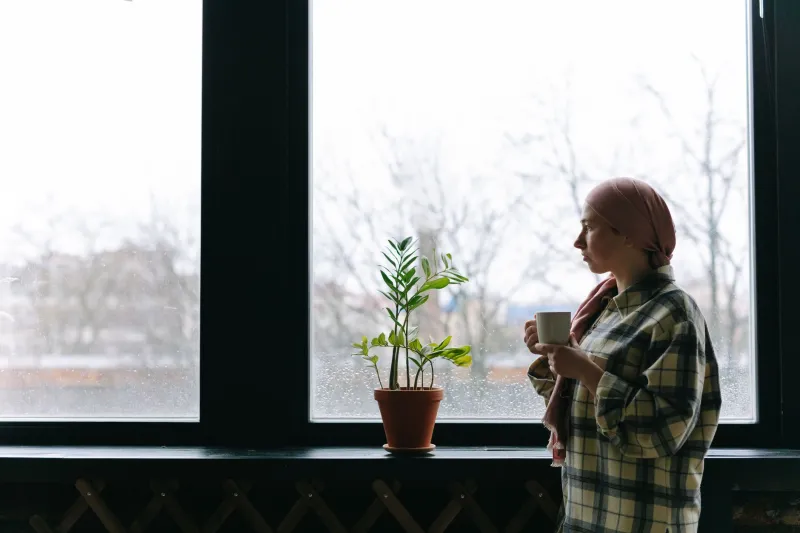
Photo by Photo by Jarritos Mexican Soda on Unsplash on Unsplash
Somewhere along the way, most of us absorbed a pretty damaging message: that needing help means you're falling apart. That crying in front of someone is embarrassing. That admitting "I'm not okay" is basically handing over proof that you can't handle your own life.
We carry this belief quietly — sometimes without even realizing it's there. We push through. We perform "fine." We post the highlight reel and keep the hard stuff in a drawer somewhere, hoping it'll just... dissolve on its own.
It doesn't.
And here's the part that nobody really talks about: the armor we wear to look strong? It's actually what's keeping us stuck.
The Myth We Were All Handed
American culture has a complicated relationship with emotional pain. We celebrate grit, hustle, and bouncing back. We admire people who "handle things" without making a fuss. From a young age, many of us — especially men, but honestly people of all genders — got the message that visible struggle is something to be managed privately, if at all.
Think about how often people respond to "How are you?" with "Busy, but good" — as if being busy is a badge of honor and anything messier than that needs a disclaimer. We've been conditioned to treat emotional difficulty like a character flaw rather than a universal human experience.
The problem? That conditioning doesn't protect us. It isolates us.
When we hide what's actually happening inside, we don't just keep our pain to ourselves — we cut ourselves off from the very connections that could help us heal.
What the Research Actually Shows
Brené Brown's decades of research at the University of Houston — which became the foundation for some of the most widely watched TED Talks in history — points to something genuinely counterintuitive: vulnerability is not weakness. It is, in her words, "the birthplace of innovation, creativity, and change."
But it's not just Brown's work. Psychological research consistently shows that people who are willing to acknowledge their struggles and reach out for support tend to demonstrate greater emotional resilience over time — not less. They recover from setbacks faster. They report higher life satisfaction. Their relationships run deeper.
Meanwhile, emotional suppression — the act of actively pushing feelings down and away — is associated with increased anxiety, higher rates of depression, and even measurable physical health consequences. The body keeps score, as the saying goes.
So the irony is almost painful: the very thing we do to look strong is quietly making us weaker.
The Difference Between Venting and Vulnerability
It's worth making a distinction here, because vulnerability gets misunderstood a lot.
Being vulnerable doesn't mean unloading every difficult feeling onto anyone who will listen. It doesn't mean performing your pain or using struggle as a way to demand attention. That's something different — and it can actually reinforce anxiety rather than relieve it.
Authentic vulnerability is something quieter. It's saying "I've been having a hard time lately" to a friend you trust, instead of reflexively insisting everything's fine. It's calling a therapist when you've been putting it off for months. It's telling a partner that you're scared, instead of deflecting with sarcasm or shutting down.
It's the small, honest moments where you let your actual self be seen — and trust that you won't be destroyed by what happens next.
That trust is hard-earned for a lot of people. If you grew up in an environment where vulnerability was met with criticism, dismissal, or even punishment, learning to open up feels genuinely dangerous. That fear makes complete sense. It's worth acknowledging before we ask anyone to just "be more open."
Why Hiding Struggles Keeps You Smaller
Here's something worth sitting with: when you hide your pain, you're not just protecting yourself from judgment. You're also protecting other people from the truth of who you are.
And that creates a peculiar kind of loneliness — the kind where you're surrounded by people who care about you, but none of them actually know you. You become close to a version of yourself that's carefully edited, and the real you stays hidden and hungry for connection.
Over time, that gap between the self you show and the self you actually are can become exhausting to maintain. It takes real energy to perform "okay" when you're not. That energy could be going toward actual healing.
There's also something that happens in relationships when one person is willing to be honest about their struggles: it gives other people permission to do the same. Vulnerability is contagious in the best possible way. When you say "I've been really anxious lately," you'd be surprised how often the person across from you exhales and says, "Me too."
Practical Ways to Practice Opening Up
If you've spent years treating emotional self-disclosure like a threat, you're not going to flip a switch overnight — and you shouldn't try to. Start small.
Name what you're feeling, even just to yourself. Before you can share your experience with others, you need to get comfortable acknowledging it internally. Journaling, even a few sentences a day, can help you identify what's actually going on beneath the surface.
Choose your people carefully. Vulnerability doesn't mean being open with everyone. It means being honest with people who have earned that trust. Think about one or two people in your life who have shown up for you consistently. Start there.
Replace "I'm fine" with something truer. You don't have to launch into a full emotional disclosure every time someone asks how you're doing. But try swapping the reflexive "fine" for something a little more honest — "Honestly, it's been a heavy week" is enough. See what happens.
Consider professional support. A therapist isn't a last resort. It's a space specifically designed for you to say the things you've been holding back — without worrying about burdening someone or being judged. If cost or access is a barrier, community mental health resources (like those available through organizations like ours) can help you find something that fits your situation.
Notice the relief. Pay attention to how you feel after a moment of genuine honesty. For most people, even a small act of authentic disclosure carries a physical sense of release. That's not coincidence. That's your nervous system responding to the lifting of a weight it was never meant to carry alone.
You Were Never Supposed to Do This Alone
Human beings are wired for connection. We are, at our core, social creatures who depend on each other for survival — not just physically, but emotionally. The idea that you should be able to handle everything internally, without needing anyone, runs counter to everything we know about how the human mind actually works.
Strength isn't the absence of struggle. It's the willingness to keep going through it — and sometimes, that means asking for a hand.
Letting yourself be seen, in all your complicated, imperfect, still-figuring-it-out humanity, isn't a sign that you've failed at being strong. It's proof that you're human. And honestly? That's the most powerful thing you can be.