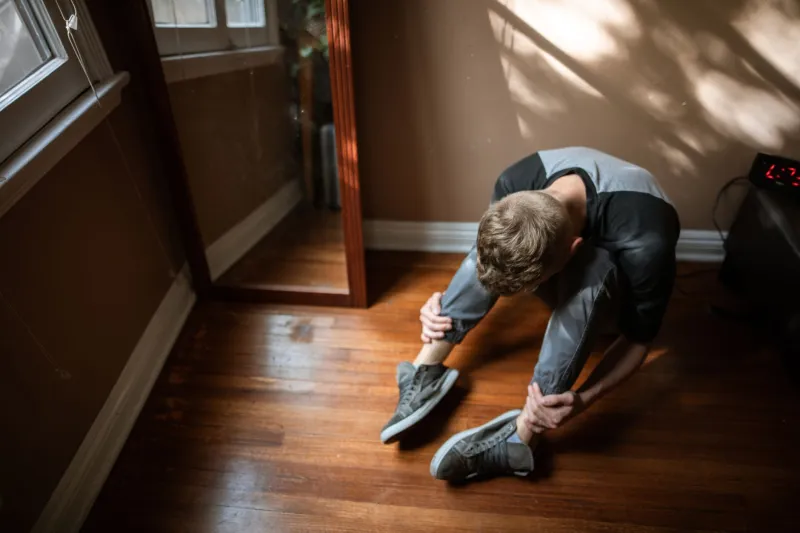
Going It Alone Won't Save You: The Hidden Cost of Healing in Isolation
There's a particular kind of exhaustion that comes from trying to fix yourself entirely on your own. You've read the books. You've downloaded the apps. You journal, you meditate, you track your moods in a spreadsheet. You know the cognitive distortions by name. And yet, somehow, you're still in the same place you were six months ago — frustrated, tired, and quietly wondering what's wrong with you.
Here's the thing: nothing is wrong with you. But something might be wrong with the approach.
America has a deep, almost religious relationship with self-reliance. Pull yourself up by your bootstraps. Do the work. Own your healing. These phrases are everywhere — in therapy memes, in wellness influencer captions, in the way we talk about mental health like it's a personal project you complete on your own timeline. And while personal responsibility absolutely matters, there's a point where that cultural script stops being empowering and starts being a trap.
The Self-Improvement Industrial Complex
The U.S. self-help industry is worth over $13 billion annually. That number tells you something important: we've turned healing into a consumer product. And like most consumer products, it's packaged and sold as something you acquire individually — a book you read alone, a course you take alone, a morning routine you build alone.
The problem is that the human brain didn't evolve to heal in isolation. It evolved in community. Neurologically speaking, connection isn't a nice bonus on top of mental health work — it's a core ingredient. Research consistently shows that social support activates the same neural reward pathways as food and physical safety. When we're cut off from genuine connection, our nervous systems register it as a threat. Chronic loneliness, studies from Brigham Young University found, carries health risks comparable to smoking 15 cigarettes a day.
So when you're grinding away at your mental health in a vacuum, you're not just working hard. You're working against your own biology.
Why 'Doing the Work Alone' Can Feel Virtuous — But Isn't
There's a subtle pride that comes with handling things yourself. It feels disciplined. It feels strong. And in a culture that pathologizes neediness and celebrates stoicism, going it alone can feel morally superior to asking for help.
But here's where it gets complicated. That pride often has anxiety underneath it. The belief that you should be able to fix yourself alone is frequently tied to shame — shame about struggling, shame about needing others, shame about not being further along by now. And shame, as researcher Brené Brown has spent decades documenting, thrives in secrecy. The more you keep your struggles private, the more power they have over you.
Isolated healing also creates a closed feedback loop. You interpret your own progress, catch your own blind spots, and validate your own conclusions. Without outside perspective, it's incredibly easy to mistake rumination for reflection, or avoidance for acceptance. You can spend months thinking about your anxiety without ever actually moving through it — because no one is there to gently point out that you're circling the same drain.
What the Research Actually Says About Healing Together
The evidence for interdependence in mental health recovery is hard to overstate. Group therapy, for instance, consistently shows outcomes comparable to — and sometimes better than — individual therapy for a range of conditions, including depression, anxiety, and trauma. The mechanisms aren't mysterious: witnessing someone else struggle with what you struggle with reduces shame. Being witnessed in your own pain reduces isolation. Accountability to others creates momentum that internal motivation alone often can't sustain.
Peer support models, which pair people with lived experience of mental health challenges, have shown measurable benefits in reducing hospitalizations and improving long-term recovery outcomes. This isn't soft science — it's documented in clinical literature. Human beings regulate each other's nervous systems in real time. It's called co-regulation, and it's one of the most powerful tools available for emotional recovery. You literally cannot access it by yourself.
Even informal community — a trusted friend who checks in, a support group that meets monthly, a family member who actually listens — provides neurological benefits that no amount of solo journaling can replicate.
Recognizing When Self-Reliance Has Become a Wall
So how do you know when your independence has crossed into isolation? A few honest questions worth sitting with:
Are you making progress, or just making plans? If you've been 'working on yourself' for a long time without feeling meaningfully different, that's worth examining. Stagnation often signals that the approach — not the person — needs to change.
Does sharing your struggles feel dangerous? If the idea of telling someone what you're really going through triggers significant fear or shame, that's not evidence that you're fine. It's evidence that isolation has become a coping mechanism.
Do you feel proud of how little help you need? That pride is worth getting curious about. Self-sufficiency is a useful skill. But when it becomes an identity, it can make you rigid — and rigidity is the enemy of growth.
Have you been the helper more than the helped? Many people with mental health struggles channel their need for connection into caring for others, which lets them stay close to people without ever being vulnerable themselves. If this sounds familiar, you're not alone — and you deserve the same care you give.
Practical Ways to Shift Toward Community-Based Healing
Moving from self-reliance to interdependence doesn't mean falling apart or becoming dependent on others in unhealthy ways. It means deliberately building a web of support that holds you while you heal.
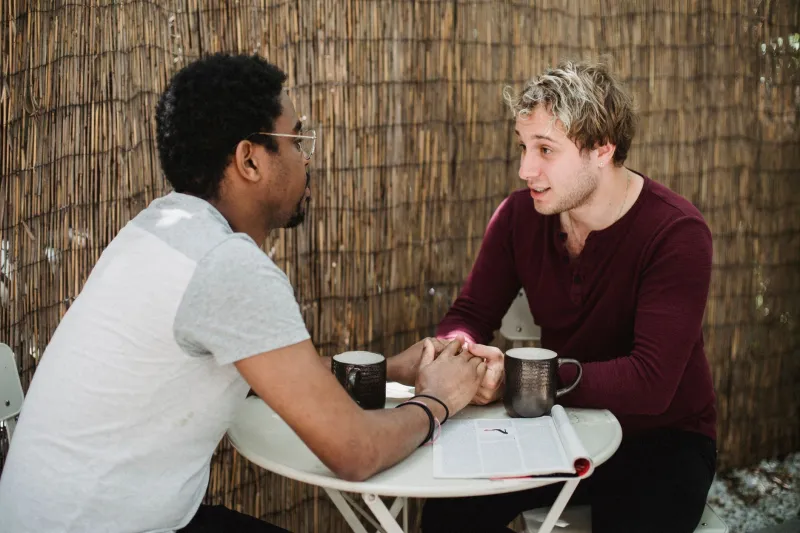
Start smaller than you think you need to. You don't have to tell your deepest truth to someone tomorrow. Start by letting one person know you've been having a hard time. That small disclosure is a neural pathway opening up.
Look for structured community. Support groups — whether through local mental health organizations, community centers, or platforms like NAMI (National Alliance on Mental Illness) — offer connection without requiring you to build relationships from scratch. The structure makes it easier.
Be honest with your therapist about your isolation. If you're in therapy, let your therapist know that you're doing most of your processing alone. That's important clinical information. If you're not in therapy, organizations like Kern Mental Health can help connect you to support options in your area.
Practice receiving, not just giving. When someone offers help, let them. When someone asks how you're doing, try answering honestly — even once.
You Were Never Meant to Do This Alone
Healing isn't a performance you deliver on your own stage. It's something that happens in the space between people — in the moments when you're honest about where you are, when someone else reflects it back to you with care, when you realize you're not the only one carrying what you're carrying.
The cultural myth of the self-made, self-healed person is compelling. But it's still a myth. Your brain needs other brains. Your nervous system needs other nervous systems. And your recovery — whatever that looks like for you — needs other people in it.
That's not weakness. That's just how humans work.